SEO

Featured vs Free Directory Listings: What You Actually Get

Add FindGreatSites to preferred sources

Every directory offers a free tier and a paid featured option, but most product owners upgrade without fully understanding what each tier actually delivers. This guide breaks down exactly what you get from a free listing versus featured placement - link equity, visibility, profile completeness, and badges - so you can evaluate each directory on its own terms.

Benjamin Huet Benjamin Huet September 11, 2026 5 min read 15 views
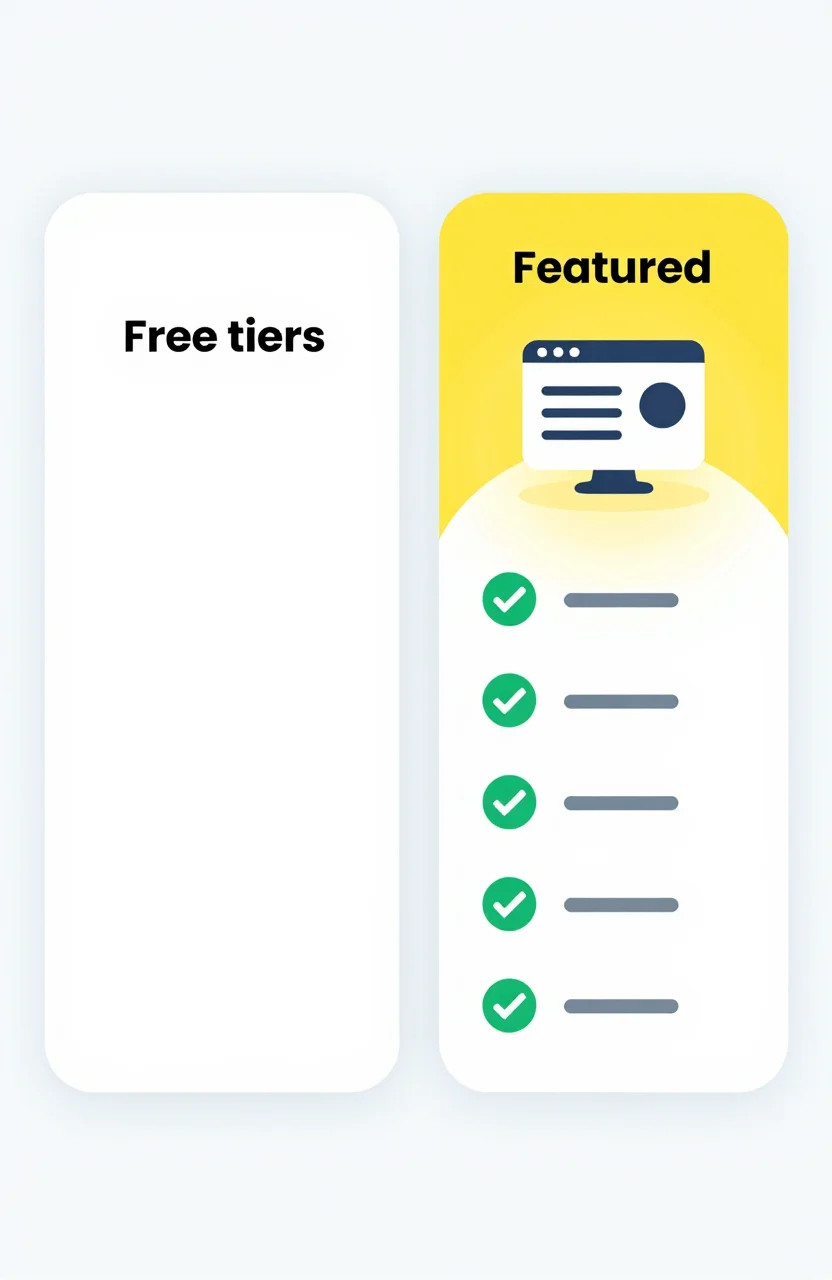
Comparison of a free directory listing card versus a featured directory listing card showing different visibility levels

Most web directories offer two tiers: a free listing and a featured or paid placement. Understanding what each tier actually delivers - before you submit - is the fastest way to decide whether upgrading makes sense or whether the free option covers everything you need.

This is not about budget or timing. It is about the specific deliverables each tier includes, so you can evaluate them on their own merits rather than on general advice.

What a Free Listing Actually Includes

A free listing on a curated directory typically gives you a basic profile with your site's name, URL, a short description, and a link. That link is the primary SEO asset - if it is dofollow and the directory has real traffic and authority, it contributes to your backlink profile in the same way any other quality external link would.

Free listings are usually placed chronologically in their category, or sorted alphabetically. Either way, your position within the category is not something you control on the free tier. You get the link, but placement is entirely at the directory's discretion.

On most directories, free listings also receive less prominent display: smaller cards, fewer data fields, or no visual highlighting. You are present in the directory, but you are not differentiated from the other entries around you.

Featured placement means different things on different directories, but the core benefit is almost always visibility. Featured listings typically appear at the top of a category, above all free submissions, or in dedicated sections that are promoted on the directory's homepage or in its newsletter.

Beyond position, featured tiers often include additional profile fields: longer descriptions, more media slots, a website screenshot, a dedicated call-to-action button, or a link to a specific landing page rather than just your homepage. These extras matter if the directory has real traffic, because a more complete profile gives visitors more reasons to click through to your site.

Some directories include category exclusivity in their featured tier, accepting only one or a handful of featured listings per niche. Others allow unlimited featured listings, which dilutes the position advantage but still improves visibility over free entries.

From a pure link equity standpoint, a free dofollow listing and a featured dofollow listing from the same directory pass the same link signal. Google does not weight a link more heavily because it appears at the top of a page - placement affects user visibility, not crawl value or link authority.

Where featured placement creates a real SEO difference is through user engagement. A featured listing that drives actual clicks contributes to referral traffic and potential secondary links if visitors share or cite your product. A free listing buried at the bottom of a long category page may be crawled and counted, but it is unlikely to drive meaningful traffic on its own.

For directories where SEO link equity is your primary goal and the directory's own traffic is low, the free tier often provides equivalent link value at zero cost. For high-traffic directories where you want real visitors to find you, featured placement pays off through engagement rather than just link equity. If you are planning multiple submissions and want to sequence them efficiently, the afternoon directory plan covers how to prioritize submissions without upgrading everywhere by default.

Badges and Verification: What They Actually Signal

Some directories include a verified badge, a featured tool emblem, or a category recognition award as part of paid placement. These are primarily social proof assets rather than direct SEO ranking signals.

A badge you can embed on your own site adds a small trust indicator for new visitors who are not yet familiar with your product. It communicates that a third party has reviewed and listed you - which carries weight for early-stage products still building brand recognition. It is not a direct ranking factor, but it can contribute to conversion rates on your own site, which indirectly supports the engagement metrics that do influence search performance over time.

Not every directory badge carries equal weight. A badge from a well-known, high-traffic directory in your niche is worth embedding. A badge from an obscure directory most of your audience has never encountered adds little. Evaluate the badge the same way you would evaluate the listing itself: on the directory's real-world reputation and traffic.

Reading the Value Before You Decide

Before upgrading any listing, three questions give you the answer quickly. First: does this directory have real traffic? A featured spot on a low-traffic directory gets you top position in a category nobody visits. Traffic is the prerequisite for featured placement to deliver any meaningful engagement advantage.

Second: what specifically does this directory's featured tier include? Not all featured tiers are equal. Some offer homepage promotion and category top placement; others just add a color border to your card. Read the feature comparison before paying - the specific deliverables vary significantly between directories.

Third: are you already visible in this niche? If you are listed on every relevant directory and referral traffic from those listings is flat, upgrading individual listings rarely moves the needle. A better use of the same budget is often finding a new directory you are not yet listed on. For SaaS products specifically, the directories where featured placement consistently delivers results tend to be the major SaaS-specific platforms with active monthly visitors rather than general web directories.

If you want to see exactly what FindGreatSites' featured tier includes - profile fields, placement details, and badge options - the full breakdown is on the pricing page.
Benjamin Huet

Written by

Benjamin Huet

Frequently asked questions

Does a featured listing pass more link equity than a free listing?

No. If both tiers include a dofollow link from the same directory, they pass the same link equity to your site. Google evaluates the link signal based on the source domain's authority and relevance, not on where the link appears on the page. Featured placement improves your visibility to human visitors browsing the directory - it does not increase the link authority weight passed to your domain.

What is a directory badge and does it help SEO?

A directory badge is an embeddable widget or image confirming that your site has been listed or recognized by a directory. It does not directly affect your search rankings, but it adds social proof on your own site and can improve visitor trust and conversion rates. If the directory is well-known in your niche, the badge carries more credibility and is worth embedding on your homepage or a landing page.

How do I know if a directory has enough traffic for featured placement to matter?

Check the directory's estimated monthly visitors using a tool like Ahrefs, Similarweb, or Semrush. If the directory receives at least a few thousand monthly visits and your target audience overlaps with its users, featured placement has a real chance of driving clicks. If traffic is very low, the visibility advantage of featured placement disappears and the free tier delivers similar real-world results at no cost.

Can I upgrade from a free listing to a featured listing later?

On most directories, yes. Free listings are typically permanent and you can request an upgrade at any time. This means you can start with a free listing, observe whether it drives any referral traffic over 30 to 60 days, and then decide whether upgrading makes sense based on actual data. Waiting to upgrade until you have seen real performance from the free tier is almost always a better approach than paying upfront.

Related articles

Illustrated grid of directory category icons representing SaaS, AI, marketing, and developer tools on a clean light background
SEO

How to Pick the Right Directory Category for Your Product

The category you choose when listing your product in a directory affects whether the right people find you. Pick wrong and your listing sits in a section no one relevant to your product ever browses.

Benjamin Huet Benjamin Huet Sep 07, 2026 6 min read
SEO Website
Analytics dashboard on a laptop showing referral traffic sources from directory listings with UTM tracking data
SEO

How to Track Referral Traffic From Directory Listings

Submitting to directories is only half the job. If you are not tracking referral traffic from each listing, you have no idea which ones are driving clicks, signups, or revenue. Here is how to set up tracking that gives you real data.

Benjamin Huet Benjamin Huet Sep 04, 2026 6 min read
Backlink SEO Website
Get Your Ecommerce Store Found in Directories
SEO

Get Your Ecommerce Store Found in Directories

Ecommerce stores on Shopify or WooCommerce face a different discovery challenge than SaaS products. Learn how to use directories to reach buyers who are actively comparing options, how to choose the right category for your store, and how to write a listing that converts visitors into customers.

Benjamin Huet Benjamin Huet Sep 02, 2026 5 min read
SEO Website
Flat illustration of marketing tool icons arranged in a structured directory grid
SEO

Marketing Tools: A Niche Directory Submission Plan

If you build SEO tools, email software, or analytics products, a generic SaaS directory playbook only gets you so far. This guide maps a vertical submission plan for marketing tools across the platforms where marketers actually discover and evaluate software.

Benjamin Huet Benjamin Huet Aug 31, 2026 5 min read
SEO Website
Personal website portfolio card inside a curated directory browse
SEO

Get Your Personal Website Found in Directories

Get your personal website found in directories: pick the personal category, write a human listing, and avoid SaaS-style copy that hides who you are.

Benjamin Huet Benjamin Huet Aug 21, 2026 5 min read
Backlink SEO Website
Stacking partner directory listings after a first FindGreatSites placement
SEO

How to Stack Partner Directories After Your First Listing

After your first FindGreatSites listing, stack partner directories in priority order. Audience fit, cadence, and measurement - not a mega list or afternoon sprint.

Benjamin Huet Benjamin Huet Aug 17, 2026 5 min read
Backlink SEO Website
Directory leaderboard driving discovery traffic to website listings
SEO

Why Directory Leaderboards Drive Extra Discovery

Why directory leaderboards drive extra discovery: public rankings pull browsers into listings through attention loops - a human traffic story, not a 90-day Google SEO plan.

Benjamin Huet Benjamin Huet Aug 14, 2026 5 min read
Rank SEO Website
Directory card mockup with a clear title and short description on a light background
SEO

How to Write a Directory Listing That Gets Clicks

How to write a directory listing that gets clicks: outcome-first titles, descriptions that sell the next visit, category choice, mistakes to avoid, and a five-minute publish checklist.

Benjamin Huet Benjamin Huet Aug 12, 2026 5 min read
Backlink SEO Website
Clean chart-style illustration of Domain Rating rising slowly for a new website
SEO

What Is a Good Ahrefs Domain Rating for a New Site?

Practical Ahrefs Domain Rating benchmarks for new domains: what DR measures, realistic 0-12 month ranges, what moves the score early, and how to read it without panicking.

Benjamin Huet Benjamin Huet Aug 10, 2026 5 min read
Backlink Rank SEO