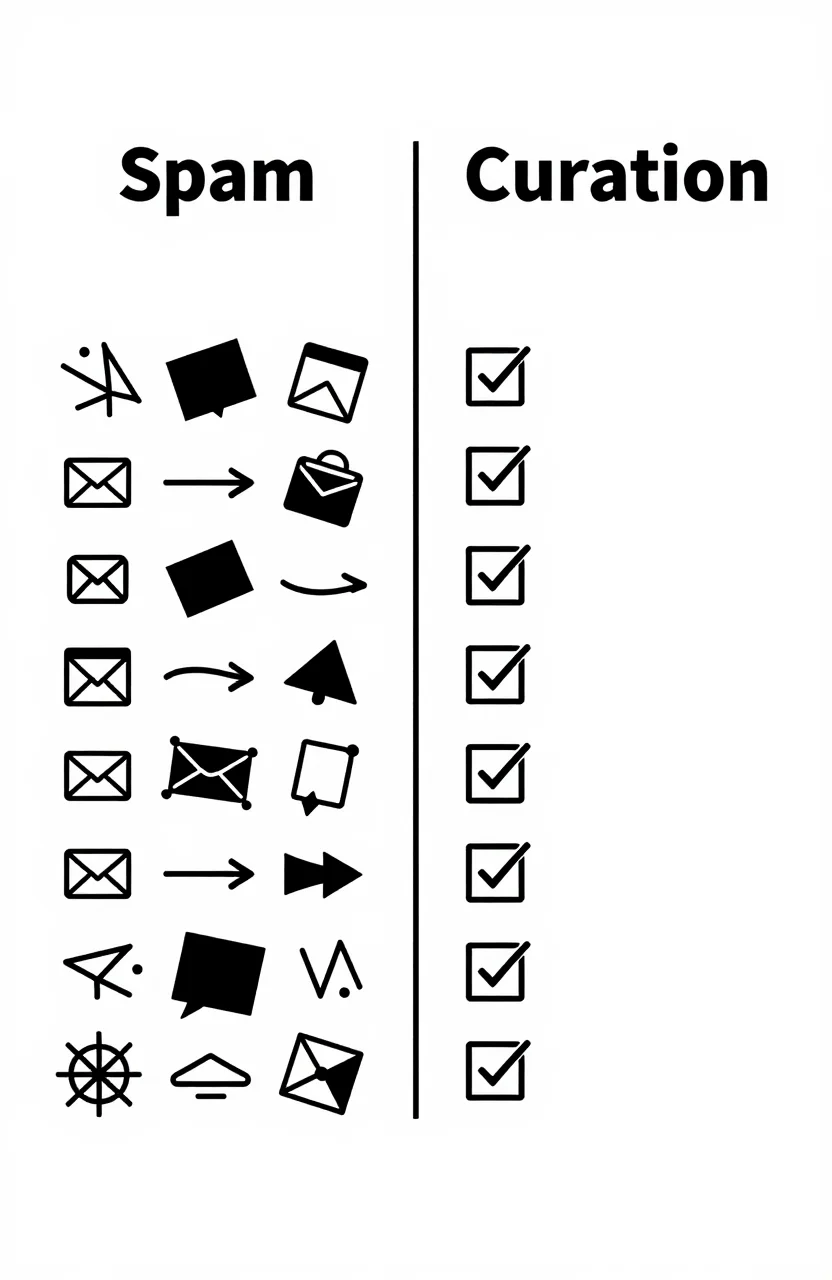
Not every directory deserves your time. While curated directories can earn you a real, lasting backlink, spam directories actively hurt your site - they signal to Google that you are chasing low-quality links rather than building genuine authority. The good news is that you can tell the difference in under a minute.
This checklist is the practical next step after you have identified which types of free backlinks are worth pursuing. Once you know the categories of directories worth targeting, this guide helps you filter out the noise before you spend any time submitting.
Why Most Directory Vetting Takes Too Long
A lot of guides tell you to spend 20 minutes analyzing every directory metric before submitting. That is overkill. Most spam directories reveal themselves within the first 30 seconds of landing on the page. You do not need a full SEO audit - you need a fast filter that separates obviously bad directories from potentially good ones so you can act quickly and move on.
The goal of this checklist is not to find the perfect directory. It is to immediately disqualify the bad ones, so you spend your limited time only on submissions that have a realistic chance of improving your rankings or driving referral traffic.
Check 1: Does Anyone Actually Visit This Directory?
Open the directory in your browser, then look for signs of real organic activity. If the directory has no active categories, returns irrelevant content, or shows no visible engagement in its listings, it has no real audience. Directories without traffic do not drive referral visits and rarely carry authority in Google's eyes.
A fast way to check: paste the directory's domain into a free tool like Ahrefs or Similarweb. If estimated monthly visits are below a few hundred and the domain rating is under 20, you are likely looking at a dead directory. Low traffic alone does not disqualify a new legitimate directory, but combine it with the other signals below and the picture becomes clear quickly.
Check 2: Who Else Is Listed?
Scroll through any category on the directory. Ask yourself: would a real human editor have approved all of these sites? Spam directories accept anything - gambling pages, adult content, unrelated foreign-language websites - because their only goal is to collect listing fees or inflate link counts, not to build a useful resource.
A curated directory has standards. You will see consistent niches, recognizable brands, and sites that clearly went through some kind of review process. The curation bar does not have to be high, but there should be one. If you see obvious junk filling every category, leave and move on to the next candidate on your list.
Check 3: Is There a Relevant Category for Your Site?
Even on a legitimate directory, context matters. A dofollow backlink from a directory that lists your product under an unrelated category will not help you, and might raise a flag with Google. Search engines evaluate link context - the surrounding text, the category name, the anchor text - not just the presence of a link.
Before submitting, confirm there is a relevant category for your site. Check whether existing listings in that category are topically close to what you do. Generic pages with no category structure at all are almost always low-quality regardless of their apparent domain rating.
Check 4: Are the Links Dofollow?
This step takes five seconds. Right-click any listing on the directory, inspect the anchor tag, or use a browser extension like MozBar. Check whether the outbound links are dofollow or nofollow.
Nofollow links are not worthless - they can still bring referral traffic and add natural diversity to your backlink profile. But if you are specifically seeking link equity from a directory submission, you need to know upfront whether free listings actually pass that equity. Some directories advertise free listings while reserving dofollow links for paid tiers. That is not dishonest, but it is something you should confirm before investing your time. For a full breakdown of how different link types behave, see the complete guide to dofollow backlinks and what they actually pass.
Check 5: Use Domain Rating as a Tiebreaker
Domain rating and domain authority are proxy metrics, not guarantees. A directory with DR 45 is generally worth more than one with DR 8, but these numbers can be inflated through link schemes. Understanding the difference between DR and DA - and when each number actually matters - will protect you from over-trusting a single figure when evaluating any backlink opportunity.
Use DR as a final tiebreaker after the directory has passed the four checks above. If a directory scores well on traffic, curation, context, and link type, a solid DR confirms it is a good use of your time. If a directory fails the earlier checks but carries a high DR, it is still not worth submitting to.
The Full Checklist at a Glance
Run through these five questions every time you evaluate a new directory. The entire process should take under 60 seconds:
- Traffic: Does the directory receive real visitors? Are traffic estimates above a minimal floor?
- Curation: Do the listed sites look like they passed some form of editorial review?
- Context: Is there a relevant category for your site, with similar sites already listed nearby?
- Link type: Are free listings dofollow? Is this clearly stated before you submit?
- Domain rating: Does the DR confirm the quality signals you have already found, or contradict them?
Five confident yes answers: submit. Three or fewer: move on. In practice, most directories either pass clearly or fail obviously. Borderline cases are rare, and spending too long on them takes time away from directories that are clearly worth the effort. When you combine this checklist with a solid understanding of which free backlink types are worth pursuing in 2026, you will build a clean, effective backlink profile without wasting submissions on directories that will never pay off.