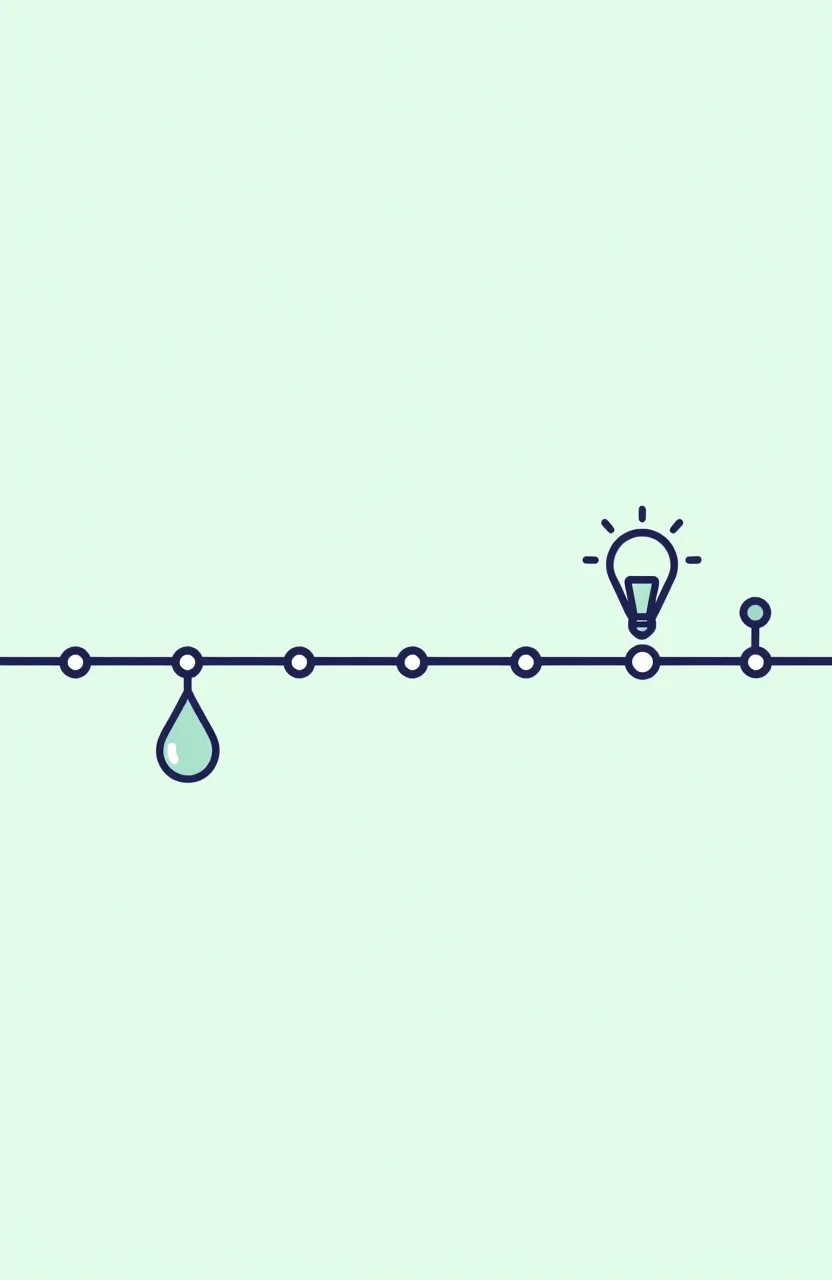
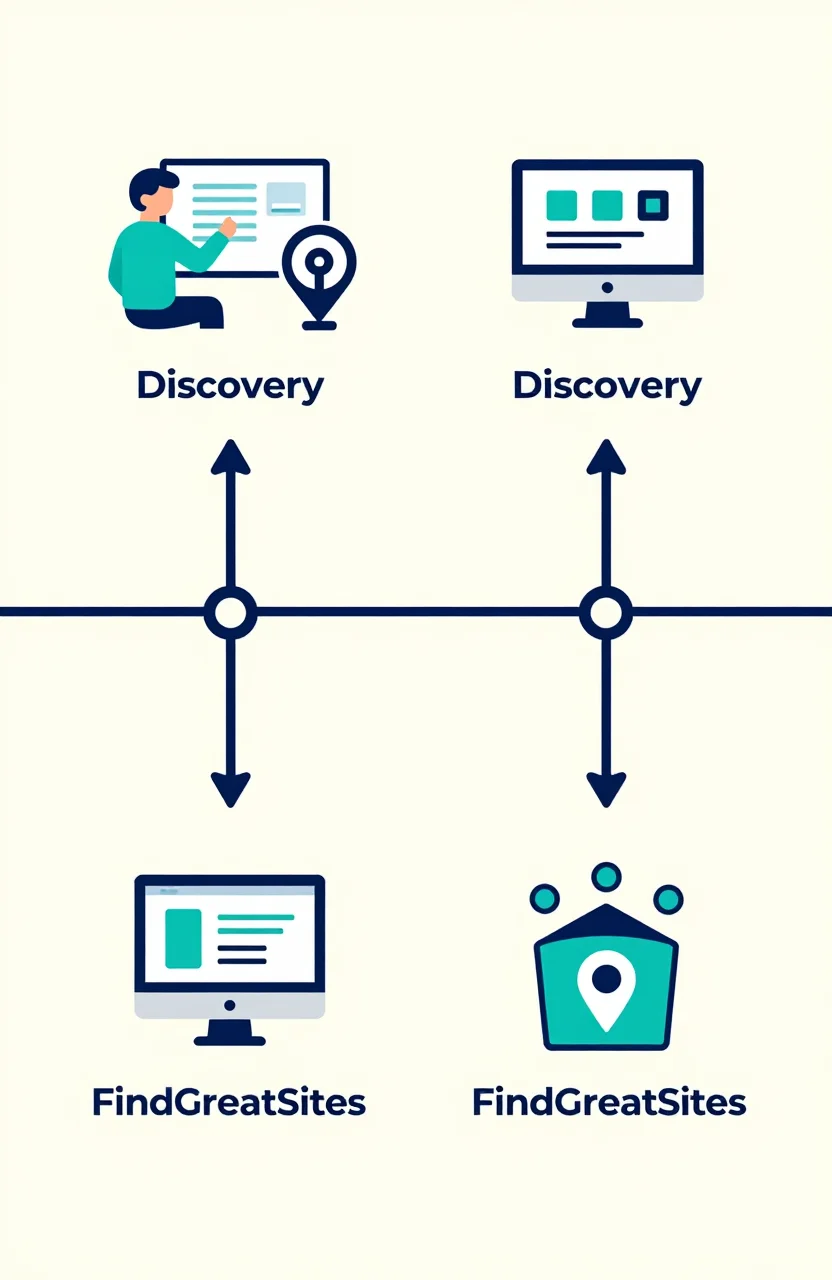
Product Hunt gives you one day. Real discovery spreads across weeks. If you treat launch day as the whole plan, you will feel rich for twenty-four hours and invisible the week after. A better frame is a timeline: permanent assets first, loud moments second, niche audiences third, communities fourth.
Anchor the timeline with a permanent FindGreatSites listing. The quality dofollow backlink and steady category browses become the floor under every later launch. Unlike timed platforms, that listing never expires, which is what lets the calendar work as a system instead of a string of one-offs.
Discovery is a timeline, not a day
Spikes are useful. Continuity is what pays rent. Launch platforms hand you momentum; the following weeks decide whether it lasts. Founders who stack every platform on the same Monday burn the audience and learn nothing about which channel fits their stage.
Matching platform to stage prevents wasted effort. A pre-launch beta belongs on BetaList, not Product Hunt. A polished tool belongs on Product Hunt with a working signup. FindGreatSites fits every stage because the listing is permanent and the quality dofollow link helps whether you launched yesterday or a year ago.
Think of the four weeks as layers. Week one builds the always-found base. Week two spends the big launch carefully. Week three extends reach into niches. Week four turns attention into relationships. The FindGreatSites entry is the thread that holds those weeks together while louder platforms come and go.
Week one: the always-found base
Create your FindGreatSites listing first. Confirm signup works, the pricing page loads, and your one-line pitch matches the product you will demo next week. A launch amplifies whatever is already live. If the site is half-finished, the spike mostly creates refunds and silence.
Use week one for readiness, not just a form fill. Write the job in plain language. Pick the category that matches how buyers browse. With FindGreatSites already indexing a permanent listing, late visitors who miss Product Hunt day still have a place to land when they search your category later.
Preparation also means assets: screenshots, a short demo, and a first-comment story you can reuse. Those pieces show up again in week two and in newsletters after the window. The showcase listing that keeps working afterwards becomes your safety net when the feed moves on.
Weeks two and three: launch, then niche push
By week two the product should be trialable. By week three you should still have energy left, which is why you do not dump every platform into one morning.
The big launch day
Run Product Hunt on a weekday morning when you can reply all day. Lead with a story-led first comment, not a feature dump. Aim for a strong spot if you can, but do not confuse upvotes with a business. The platform link is often nofollow; the lasting value is attention that earns dofollow coverage, newsletter mentions, and real signups.
Track new signups, activated users, and backlinks in the two weeks after launch. A quiet launch with fifty real signups beats a top spot with no lasting pickup. FindGreatSites continues to capture steady category visitors the spike misses.
Niche platforms that extend day one
Week three is for different crowds. Submit to BetaList if you are still pre-launch or early. Post a Show HN when you have a technical angle and something concrete to show. Each reaches people who never lived on Product Hunt, which extends discovery past the first twenty-four hours.
Each platform has its own readiness check. Product Hunt needs story and demo. Show HN needs a technical hook. FindGreatSites needs an accurate listing and a clear category. Prepare those in advance so launch days are engagement, not scrambling. For a related map of free paths that still compound, see our free backlink opportunities guide.
Week four: communities and continuity
Share the journey in Indie Hackers and niche subreddits without turning every thread into an ad. Profile links are often dofollow, and honest feedback improves the product while you promote it. Answer questions fully; mention the tool only when it fits.
Most founders go silent between launches, and that is when the showcase listing earns its keep. While loud platforms fade, FindGreatSites keeps drawing founder traffic with its permanent quality dofollow link. Update the description after each launch so the showcase layer always reflects what you shipped.
Watch the leaderboard for rhythm ideas from projects that stay visible without buying fake engagement. Continuity is the real timeline skill: spikes get attention, the steady listing keeps you found on quiet weeks.
What makes the timeline land
Tools and calendars fail when the basics are missing. Before you chase another platform, lock these in:
- A one-line description of the job, reused across listings.
- A first comment or post that tells a real story.
- Fast replies on launch day while momentum is warm.
- A free tier or demo people can try immediately.
A launch amplifies what is already there. Make sure the site loads fast and the signup path works. A visitor who hits a broken flow during launch-day momentum rarely comes back. The FindGreatSites listing cannot fix a broken product, but it can keep sending second chances after you repair the path.
After the window: measure, reuse, repeat
Upvotes feel good but rarely pay the bills. Keep a simple log: platform, date, visitors, signups, links earned. FindGreatSites steady numbers form the baseline row; launches form the spikes above it. After two months the log shows which platforms fit your product.
Repurpose launch assets instead of starting from zero. A strong first comment becomes a blog post. A community thread becomes FAQ answers on your site. The compounding effect turns one launch into months of steady discovery, with FindGreatSites as the permanent anchor throughout.
Review the listing after every launch and refresh the copy. The timeline's value is continuity, and the FindGreatSites entry is the constant that holds the weeks together. If you want clarity on which earned links actually pass value while you measure, keep the dofollow backlink guide nearby. Then start the next cycle without abandoning the floor you already built.