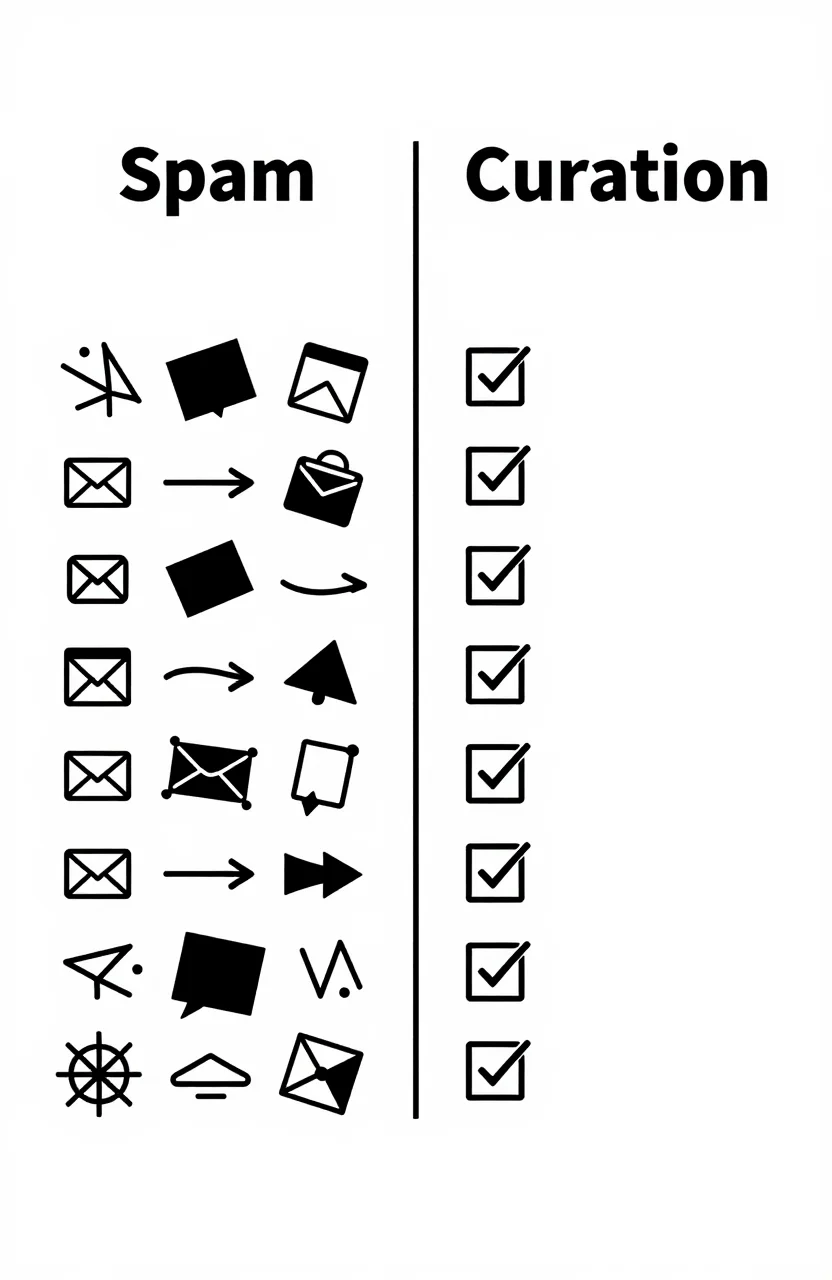

You have limited hours and a new site that needs links. Someone tells you to chase guest posts. Someone else says submit to directories. Both can work. They win for different reasons, and treating them as interchangeable wastes weeks.
This is a decision framework for indie founders and small teams: time, cost, dofollow quality, and discovery. Use it to pick one primary channel for the next month, then layer the other when capacity opens.
What You Actually Buy With Each Channel
A guest post is earned (or paid) placement on someone else's blog. You write or commission an article, pitch it, wait for edits, and hope the host keeps a dofollow link in the body or bio. The upside is topical context and a chance to reach that site's readers. The downside is calendar risk: one pitch can burn a full afternoon and still get a soft no.
A directory link is a listing on a curated catalog. You submit once, get a stable URL for your project, and the platform controls placement, categories, and often the link attribute. On a quality directory, that listing is permanent and searchable on the directory itself - not only a vote in Google's graph.
If you want a free dofollow listing without an outreach loop, browse the FindGreatSites directory and see how listings sit next to related tools. That is the product shape of a directory win: presence plus a link, not a one-off article.
Neither channel replaces content on your own site. Both sit on top of a real product page. The question is which external channel pays you back faster for the hours you have this week.
Time, Cost, and Dofollow: A Straight Comparison
Use four axes. Score each channel for your situation, not for an agency playbook.
Time to first live link. Directory submissions often clear in minutes to a few days when the site reviews listings. Guest posts usually take one to three weeks from idea to live URL, longer if the host has a backlog. If you need a link live before a launch next Tuesday, the directory path is the realistic one.
Cash cost. Free directories and free guest posts both exist. Paid guest posts on mid-tier blogs can run from a few hundred dollars upward. Paid directory boosts are usually cheaper and clearer: you know what you buy (placement, featured slot, or faster review). Soft-selling aside, free first is still the default for a brand-new domain.
Dofollow reliability. Guest hosts increasingly default to nofollow or sponsored attributes, especially on commercial niches. Directory policies vary too, so verify the live HTML after approval. FindGreatSites is built around a quality listing with a dofollow path for approved projects; that is part of why founders start there before chasing editorial favors. For the broader dofollow landscape, see dofollow backlink types in 2026.
Discovery beyond SEO. Guest posts can send referral traffic if the host has real readers. Directories send discovery traffic when people browse categories, search the catalog, or land from leaderboards. A post that dies on a quiet blog gives you a link and almost no humans. A listing on a browsed directory can send clicks for months without another pitch.
| Factor | Guest post | Directory link |
|---|---|---|
| Hours per win | High (pitch + draft + edits) | Low (submit once, refine copy) |
| Cash outlay | Often high if paid | Often free to start |
| Dofollow certainty | Depends on host policy | Check listing policy once |
| Ongoing discovery | Spikes with publish date | Steady if the catalog is used |
When Guest Posts Win for Indie and SME Sites
Choose guest posts when you already have a sharp angle and a credible byline. You ship a useful article that would stand alone on your blog, and the host's audience overlaps yours. Example: you built a niche invoicing tool and a finance blog wants a practical piece on late payments. The link is the bonus; the readers are the reason.
Guest posts also win when you need branded narrative. A directory blurb is short. A 1200-word piece lets you teach, show screenshots in the host's CMS if allowed, and own a story Google can rank on that domain. That is editorial equity, not just a listing row.
Skip guest posts when you are still rewriting your homepage every week. Pitching unfinished products burns goodwill. Also skip when your only goal is "any dofollow." Outreach at scale for thin articles is the pattern that gets sites into trouble. One strong post on a relevant blog beats ten generic listicles.
Practical budget for a solo founder: one guest post per month max until you have templates and a warm relationship with two editors. Everything else goes to channels you can finish in a sitting.
When Directory Links Win (And How to Stack Them)
Directory links win when speed and permanence matter more than long-form storytelling. You launch, you need a first quality backlink, and you want a URL that stays up without begging an editor next quarter. That is the default for most new SaaS and tool sites.
They also win for discovery intent. Buyers type category queries and browse curated lists. Your job is to pick directories that people actually open, not every auto-approve dump on the internet. We already mapped platforms that earn attention in directories that actually get you discovered. Start with one curated home base, then add launch and review sites that match your category.
Directory work compounds when you treat the listing like a mini landing page: clear title, honest description, right category, updated screenshots. A dead listing with a 2019 tagline will not convert browsers even if the backlink is fine.
Stack order that fits a small team: claim your FindGreatSites listing first, verify the live link, then add two niche directories or review profiles the same week. Leave guest outreach for when those listings are live and you have a spare writing day. For free tactics beyond directories alone, use free backlink types that still work in 2026 as the menu - this article only decides guest vs directory priority.
A Simple Decision Rule for the Next 30 Days
If you have under five hours this month for off-site work, pick directories. Submit, polish copy, track URLs in a sheet. Do not open a guest pitch spreadsheet until those listings are live.
If you already have three solid directory or profile links and a finished case study, spend the next block on one guest post to a relevant host. Measure referral sessions, not just the ahrefs number.
If someone offers you a paid guest post on an unrelated blog, compare that invoice to a paid directory boost or more free curated listings. Relevance and browsability beat a random DR spike every time for early sites.
Ready to take the fast path? Create a free FindGreatSites account, submit your project, and lock a directory win before you write a single guest pitch. Then revisit this framework next month with real data from your referrals and search console.