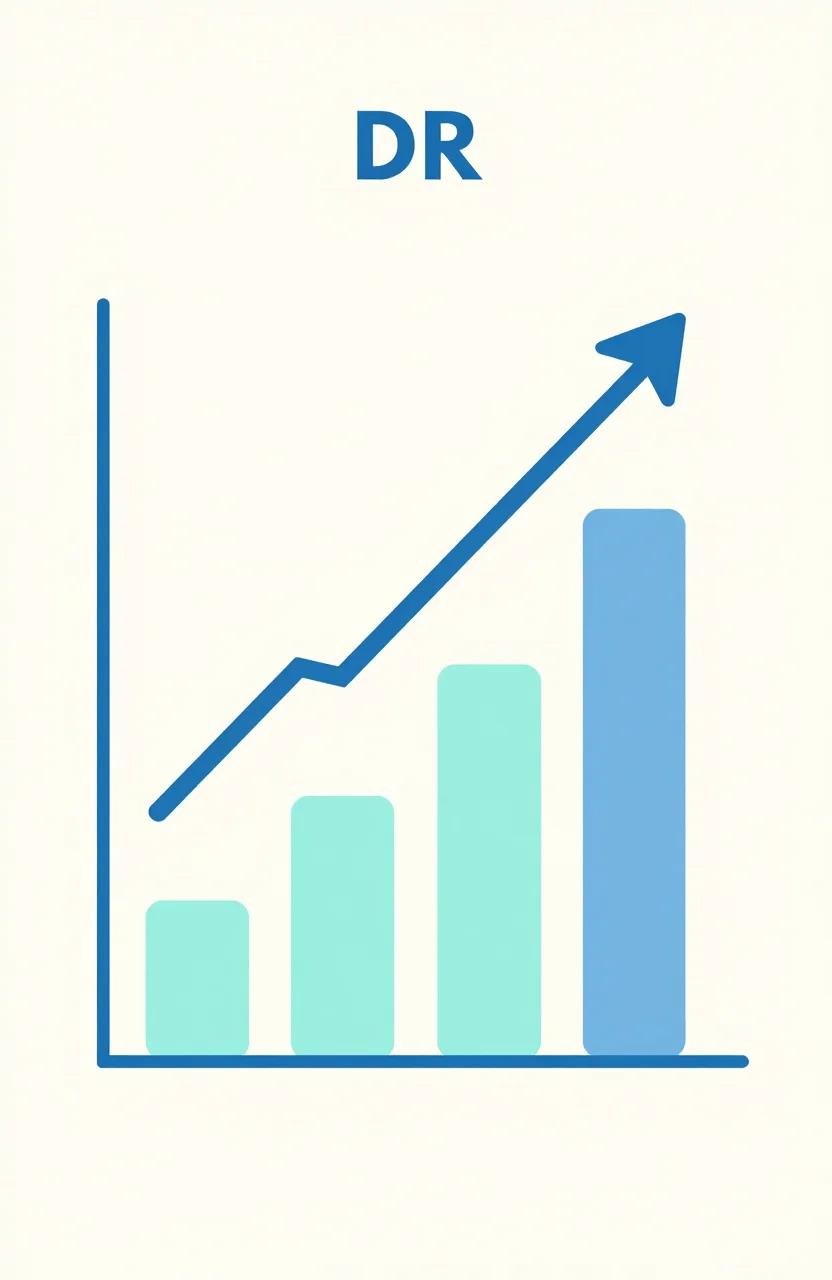
If your domain is a few weeks old and Ahrefs shows Domain Rating near zero, that is normal. DR is a comparative score of backlink strength, not a grade for how good your product is. New sites start low because they have few (or no) referring domains yet.
The question people actually mean is simpler: what DR range should you expect in the first months, and when does the number stop being noise? This guide gives practical benchmarks for new domains. It is not a DR vs DA tool comparison. If you need that metric duel, use the existing DR vs DA guide and come back here for timelines.
What Ahrefs Domain Rating measures (and what it ignores)
Domain Rating is Ahrefs' 0-100 score for the strength of a site's backlink profile relative to other sites in their index. It is built from referring domains and how those domains link out. A higher DR usually means a stronger link profile in Ahrefs' model.
DR does not measure traffic, brand search, conversion rate, or content quality. A site can sit at DR 5 and still get customers from directories, social, or direct visits. A site can sit at DR 40 and rank poorly if the pages are thin or the niche is brutal. Treat DR as one backlink health number, not as a business scorecard.
Also remember that scores move when Ahrefs recrawls and when your competitors' profiles change. Your DR can rise because you earned links, or because the relative distribution shifted. For a new site, week-to-week jitter of a few points is common. Look at the trend across months, not a single screenshot.
If you are early, your first job is not "hit DR 30." Your first job is to earn a few real, relevant links and confirm they appear as referring domains. DR follows that work. It does not lead it.
Practical DR benchmarks for a new domain
These ranges are planning tools for indie and small sites, not promises. Niches differ. A local brochure site and a competitive SaaS tool will not move at the same speed.
| Stage | Typical DR range | What it usually means |
|---|---|---|
| Brand new (0-30 days) | 0-5 | Few or no referring domains. Indexing and first listings matter more than the score. |
| Early traction (1-3 months) | 5-15 | A handful of real links from directories, profiles, or small mentions. Still a fragile profile. |
| Building (3-6 months) | 15-25 | Repeated link acquisition and some topical relevance. Competitive head terms are still hard. |
| Solid base (6-12 months) | 25-40 | Enough referring domains to support niche pages if content and intent match. |
Is DR 10 "good" for a new site? Yes, if it came from relevant links and not spam. Is DR 20 "bad"? No. For many new domains, DR 20 in six months is a healthy outcome. Chasing DR 50 in month two usually means buying links or spraying low-quality directories, which is the wrong race.
Use competitors as context. If the sites ranking for your main keyword sit around DR 45-60, you will not beat them on DR alone in a quarter. You compete on specificity: long-tail pages, clearer offers, and links that match your topic. Pair this mindset with a realistic launch plan such as the 90-day plan to rank a new website.
What actually moves DR early (and what wastes time)
DR moves when Ahrefs sees new referring domains that themselves have some strength and that are not drowned in outbound spam. One link from a moderately strong, topical site usually helps more than twenty links from empty auto-approve pages.
Useful early moves:
- One curated directory listing with a live dofollow link in a relevant category.
- A small number of profile or resource links on pages people actually visit.
- Content worth citing so other sites have a reason to link without a pitch script.
Wasteful early moves:
- Buying bulk "DR boost" packages that dump junk referring domains.
- Submitting to every free directory without checking if the link is indexed or relevant.
- Obsessing over a two-point DR drop after a crawl update.
If you want a concrete first listing, browse the FindGreatSites directory, then add your project when the homepage explains what you do in one sentence. A clean listing will not magically jump you to DR 30, but it is a real referring domain you can verify. For free link types that still make sense in 2026, see free backlinks that actually work.
How to read your DR without panicking
Check three things together: Domain Rating, referring domains count, and whether those domains look topical. A jump from DR 3 to DR 12 with five relevant referring domains is progress. A jump from DR 3 to DR 18 with fifty random profile spam links is a warning sign.
Also compare organic impressions in Search Console. If DR is flat but impressions rise on long-tail queries, your site is still moving. If DR rises but impressions stay zero for months, you may have links without useful pages. Fix the pages.
Recheck monthly, not daily. Log the date, DR, referring domains, and one note about what you shipped that month (listings, posts, outreach). That log beats screenshots shared out of context.
When someone asks what a good Ahrefs Domain Rating is for a new site, answer with a range and a caveat. For most new domains, DR 0-5 at launch is expected, DR 10-20 in the first few months is a solid early band, and DR 25+ within a year is a meaningful base if the links are real. Above that, judge yourself against niche competitors, not against famous brands.
Keep building pages people can use, earn links that make sense for your topic, and let DR trail the work. If you are ready to place a first public listing while you grow, create a free FindGreatSites account and submit a clear project page.